
If your old tank has failed or you are ready to upgrade, water heater installation in McDonough starts with a short phone call. Water heater installation means removing the old unit, fitting the new one with the right water, fuel and venting connections, and testing it before you use it. Describe your home, the heater you have now and how many people rely on it, and we connect you with an experienced local pro.
McDonough homes range from 19th-century houses near the courthouse square to slab-on-grade builds finished in the last few years, so the right heater, vent and location change from one street to the next. The pro talks through the options first and gives you the upfront price before any work begins.
The sections below explain what that conversation covers, so you know what to ask. A new water heater install goes more smoothly when you arrive at the call knowing a few terms.
Water heater sizing: choosing a size for your household
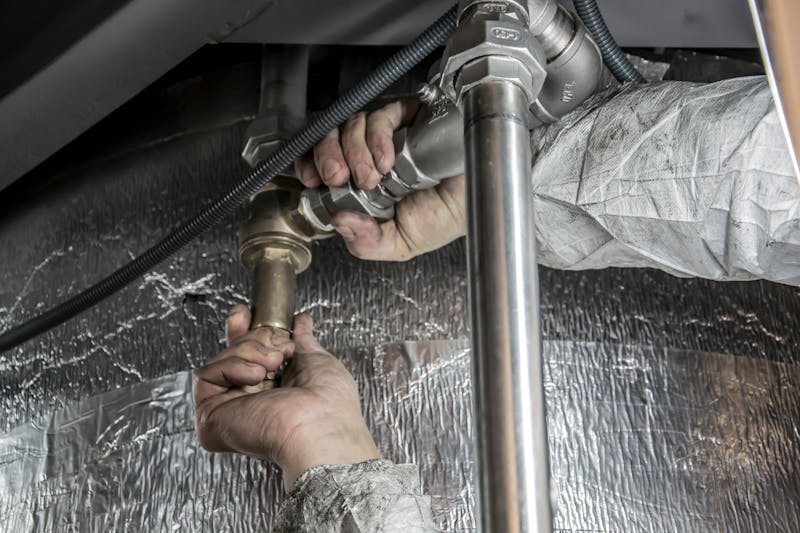
Sizing starts with people, not square footage. The pro asks how many people live in the house, how many showers run in the same morning hour, and whether a large tub or a second bathroom is in the picture.
Two terms matter. The first-hour rating describes how much hot water a heater can deliver in a busy hour, and the recovery rate describes how quickly it reheats once hot water has been used. A household that showers back to back needs strong recovery, not only a large tank.
A bigger tank is not automatically the answer for water heater installation in McDonough. It takes more floor space, and it may call for a different vent or a stronger gas or electrical supply. The pro weighs those against how your family actually lives, so you are not left decoding a sizing chart.
Gas, electric, heat-pump or tankless: how the pro helps you choose
What you have now shapes the starting point. Older in-town McDonough homes more often have gas heaters, while many recent builds are all-electric, and switching from one to the other adds work that the pro explains before you decide.
| Type | Often a good fit when | Ask the pro about |
|---|---|---|
| Gas tank | The home already has a gas supply and a clear vent path | Venting type, combustion air and the gas connection |
| Electric tank | The home is all-electric, as many newer builds are | Space, electrical capacity and recovery rate |
| Heat-pump water heater | You want an electric option that works differently from a standard tank | Room around the unit, airflow and the condensate drain |
| Tankless | You want hot water on demand and the supply and vent can support it | Gas line size or power, venting and flow rate |
A tankless water heater swaps the storage tank for a heat exchanger that fires on demand. It suits the right house, but it needs the right supply and venting, so it is a conversation, not a default.
Heat-pump models are worth raising for all-electric homes, though they need space and airflow to work properly. The pro explains each option in plain terms and leaves the choice to you.
Not sure which type suits your house? Describe it to a person who knows McDonough homes.
Get a straight answer by phoneWhat happens on installation day
A new water heater install, like any water heater installation in McDonough, follows a predictable order, and the pro explains each stage as it happens. Details differ by home, but the sequence is usually this:
- The pro confirms the new heater against what was agreed on the phone, including size, fuel and venting.
- Water, gas or power to the old heater is isolated by the pro, then the old tank is drained and disconnected.
- The new heater is set in place and connected to the water lines and, for gas models, to the fuel supply and vent.
- Safety and comfort parts are fitted or checked, such as the relief valve and its discharge pipe, an expansion tank where one is needed and a drain pan where space allows.
- The heater is filled, started and tested, and the pro shows you the controls and what to watch for.
- The old heater is dealt with as agreed. Ask on the call whether removal is part of the upfront price.
None of these steps is for homeowners to try. Gas, venting and electrical connections are the pro's job.
Expansion tank installation, venting and drain pans
Three smaller parts matter more than their size suggests.
Expansion tank installation
Water expands as it heats, and in some plumbing setups that extra pressure has nowhere to go. An expansion tank gives it somewhere to go. The pro tells you whether your home needs one.
Venting
Gas heaters must move exhaust out of the house, through a conventional flue or, on power-vent and direct-vent models, through a fan-assisted or sealed run. The pro matches the vent to the heater and the building.
Drain pans
A drain pan with a drain line catches small leaks where a heater sits above living space, such as in an attic or an upstairs closet. Whether one makes sense depends on where yours will live.
Permits and inspections: ask the pro
Permit and inspection requirements for water heater installation in McDonough vary with the job and the location, and this site does not quote rules. Ask the pro on the call what applies at your address and who arranges it. A clear answer before work starts is a good sign.
Fitting a new heater in a McDonough garage, closet, basement or attic
Where the heater sits changes the job. In the garage-heavy subdivisions on the east side, around Lake Dow, Airline and Postmaster roads, the tank often lives in the garage or a utility closet, where access is easy but the space around it is limited.
West of downtown, slab-on-grade homes in the Avalon area, from the late 2010s on, often put the heater in a garage, attic or closet, which affects how it is vented and reached. Those homes are covered on our water heater repair in Avalon page.
Around the courthouse square, houses run from the 19th century to mid-century, and gas heaters and crawl spaces are more common. A crawl space brings its own questions about access and moisture, which we cover under water heater repair in McDonough Historic District.
Attics need extra thought because a leak there reaches the ceiling below, which is where a drain pan earns its place. If your current tank is already a leaking water heater, say so on the call so the pro can plan for it. The same goes for a home with no hot water at the moment.
Many recent builds are all-electric, so a replacement there is usually an electric tank or a heat-pump model rather than a gas one.
Know where your heater sits? Tell the pro and the plan gets easier.
Check availability in McDonough